

Introduction
How to improve first call resolution rate — starts with empowering your support team to solve customer issues on the very first interaction. Train agents to actively listen, ask the right questions, and access full customer history through your CRM. Provide them with clear workflows, authority to make quick decisions, and a strong knowledge base. Regularly review repeat call reasons and address root causes through better processes or product fixes. Use AI call transcription and analytics to uncover patterns and improve responses. When customers get complete answers the first time, satisfaction, loyalty, and operational efficiency all improve significantly.
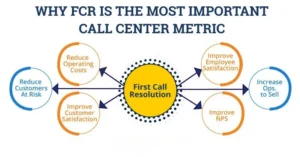
In today’s hyper-competitive business landscape, customer support isn’t just about answering calls—it’s about resolving issues on the first call. That’s why knowing how to improve your first call resolution rate is critical. High first call resolution (FCR) means fewer repeat contacts, greater customer satisfaction, lower operational costs—and a stronger brand reputation. Research confirms that companies with better FCR rates enjoy higher customer loyalty, fewer repeat interactions, and improved bottom lines.
Here we’ll walk you through 5 actionable strategies you can apply now to raise your FCR rate and delight your customers—leveraging modern call-tracking software, agent empowerment, and robust processes. Let’s dive in.
Section 1: Understand and Measure Your Starting Point
1.1 Define “Resolved” and “Repeat”
To improve First Call Resolution (FCR), your organization must clearly define what counts as a resolved call and what qualifies as a repeat call. A “resolved” call should represent a customer issue that is fully addressed during the initial interaction—where the customer confirms satisfaction or does not require further assistance. Some teams define resolution as the moment the customer says, “That’s all, thank you,” while others measure it based on post-call behavior—such as no follow-up contact within 24 to 48 hours. The key is to ensure this definition aligns with your customer service goals and is measurable across all teams.
On the other hand, a “repeat” call should refer to any subsequent interaction about the same issue within a defined timeframe—commonly within 7 days. However, some businesses may extend this window depending on product or service complexity. The important factor is consistency: every department must apply the same criteria.
Without clear internal definitions, your FCR data becomes unreliable and misleading. Agents may think they’ve resolved an issue when the customer doesn’t, leading to inaccurate performance reports. Establishing shared definitions ensures transparency, accurate reporting, and better accountability—ultimately helping your team improve efficiency and deliver consistent customer experiences.
1.2 Calculate Your Current FCR
Use the simple formula:
For example, if you handled 5,000 calls last month and resolved 3,750 on the first contact, FCR = 75%
1.3 Benchmark and Set a Target
Benchmarking and target-setting are critical steps in improving your First Call Resolution (FCR) rate. Before setting goals, you must first understand where you currently stand. Measure your existing FCR rate using consistent criteria—such as the percentage of customer issues resolved on the first interaction without follow-ups. Industry benchmarks show that a good FCR rate typically falls between 70% and 79%, while anything above 80% is considered world-class performance, according to Hitachi Solutions and other customer service studies.
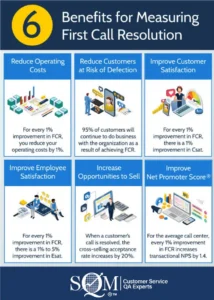
Once you know your baseline, set realistic, data-driven goals. For example, if your current FCR is 65%, aim to raise it by 5–10% within the next six months. Avoid setting targets too high initially, as drastic goals can frustrate your team and lead to burnout or poor-quality interactions. Instead, focus on gradual, sustainable improvement supported by training, process refinement, and technology upgrades.
Continuously monitor progress using regular reports and feedback sessions. Recognize teams or agents who help meet or exceed targets—positive reinforcement motivates consistency. Remember, benchmarking is not just about comparison; it’s about understanding your performance trends and using that insight to build a culture of continuous improvement and customer satisfaction.
Section 2: Empower Agents with the Right Tools & Training
Your agents are the frontline. To improve FCR, they must have the tools, authority and training to resolve calls quickly and completely.
2.1 Comprehensive Training Programs
Comprehensive and ongoing training is essential to improving First Call Resolution (FCR). Regular training sessions should focus on both technical and interpersonal skills. Agents must stay updated on product or service changes, system upgrades, and new policies to handle inquiries accurately. In addition to knowledge, emphasize soft skills such as active listening, empathy, and clear communication, which help agents understand customer concerns fully the first time.
Training should also include real call scenarios, mock sessions, and problem-solving exercises to build confidence and adaptability. Encourage continuous learning through workshops, coaching, and e-learning modules so agents can refine their approach over time.
When agents are well-prepared, they can resolve issues without escalation or repeat calls. This not only boosts FCR but also enhances customer satisfaction, reduces handling time, and builds a stronger, more capable support team ready to deliver consistent, high-quality service.
2.2 Real-Time Access to Information
An up-to-date knowledge base or CRM is indispensable. When an agent can instantly locate customer history, relevant policies, and step-by-step instructions, resolution becomes faster and more accurate.
2.3 Empower Agent Decision-Making
Avoid unnecessary transfers or approvals. If an agent has the authority to issue a refund or escalate internally, the customer doesn’t need to call back. Recognise and reward agents with high FCR performance to reinforce desired behaviour.
Section 3: Streamline Processes & Use Smart Workflow Design
Even the best agents will struggle if your processes are inefficient. Here’s how to refine workflow to boost FCR.
3.1 Smart Call Routing
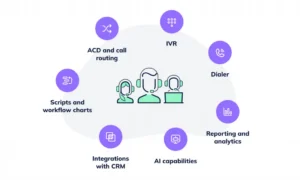
Ensure customers reach the right person first via skills-based routing, IVR menus, and agent availability logic. Mis-routed calls reduce FCR significantly. WOW24-7 |
3.2 SOPs & Escalation Paths
Create standard operating procedures for common issues. Document escalation paths so the agent knows exactly when to escalate and whom. Consistency reduces handling time and callbacks. Hitachi Solutions

3.3 Promote Self-Service Options
Enable customers to resolve simple issues themselves via knowledge-bases, chat bots, or FAQs. When they do, you free agents for more complex tasks and reduce repeat calls.
Section 4: Leverage Technology & Call-Tracking Analytics
Modern tools give you visibility into what happens on calls and why some calls aren’t resolved. With the right software, you can make data-driven improvements.
4.1 Call Transcription & Sentiment Analysis
Use call-tracking software like VoiceTotal to transcribe calls, detect keywords/sentiment, and flag calls that ended with follow-ups. This helps you identify root causes for repeat calls.
4.2 Real-Time Dashboards & Alerts
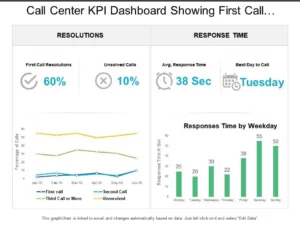
Equip supervisors with dashboards that highlight low FCR calls, long handle times, or specific agents needing coaching. With early warning you can act fast.
4.3 Feedback Loops for Continuous Improvement
Track repeat call reasons, quantify how often each reason occurs, and feed that back into training, process improvements and knowledge-base updates. Over time your FCR will rise as your processes mature.
Section 5: Monitor, Report & Improve Continuously
Raising FCR isn’t a one-time project—it’s a continuous journey of measurement, refinement and improvement.
5.1 Define Key Metrics
In addition to FCR itself, monitor metrics like:
-
Repeat call rate
-
Average handle time (AHT)
-
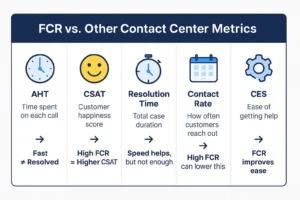
Customer satisfaction (CSAT)
-
Agent occupancy and transfer rate
Tracking these helps you correlate improvements in one area with gains elsewhere. Nextiva
5.2 Regular Review Meetings
Hold weekly/bi-weekly “FCR check-in” meetings: review top repeat-call reasons, best performing agents, and new process improvements. Create action items and track against targets.
5.3 Set Realistic Targets & Celebrate Wins
Once you know your baseline, set incremental improvement targets (e.g. 2% increase per quarter). Celebrate wins when you hit them—it reinforces agent behaviour and process adoption.
5.4 Align With Customer Satisfaction
Remember: FCR improvements should align with improved CSAT and retention. A high FCR that simply rushes customers off the line isn’t enough. The customer must feel fully resolved.
FAQ: First Call Resolution (FCR)
1) What is First Call Resolution (FCR)?
First Call Resolution is the percentage of customer issues fully solved in the very first interaction—no follow-up calls, emails, or tickets required. A higher FCR directly correlates with stronger customer satisfaction and lower support costs.
2) What’s a “good” FCR rate?
Benchmarks vary by industry, but many contact centers aim for 70–79% as healthy and 80%+ as excellent. What matters most is continuous improvement from your own baseline.
3) How do I calculate FCR accurately?
Choose a clear window (e.g., 48–72 hours).
Formula: FCR % = (First-call-resolved issues ÷ Total issues) × 100.
Define “resolved” consistently across teams to avoid data noise.
4) What changes improve FCR fastest?
-
Smarter call routing (skills-based/IVR).
-
Real-time access to knowledge bases and CRM history.
-
Agent empowerment (refund/exception authority).
-
Root-cause analysis of repeat calls using call tracking and QA.
5) How can technology help?
AI-assisted transcription, sentiment detection, and analytics flag repeat-call drivers, shorten handle time, and guide targeted coaching. Modern call-tracking platforms surface patterns you can’t see manually.
6) Where can I learn more?
Explore deeper tutorials, playbooks, and measurement guides on the VoiceTotal blog.
Conclusion
In a world where customers expect immediate and effective solutions, knowing how to improve your first call resolution rate is a key competitive advantage. By measuring your baseline, empowering your agents, refining your processes, and leveraging the right call-tracking and analytics tools—your business can transform support from a cost centre into a growth engine.
At VoiceTotal, we specialise in helping call-centres and service organisations gain clarity on call performance, boost first-call resolution, and deliver customer delight. If you’re ready to take your FCR to the next level, explore how our analytics platform can support you.
For more insights and strategies, check out other posts on our blog home—and stay tuned for our next deep dive on “Optimising After-Call Work for Better Customer Outcomes”.
Internal Link
Explore additional resources and related insights on the VoiceTotal blog: https://voicetotal.com/blog/